
Index Fund Risk in Retirement: What Your 401(k) Might Be Missing

For most people, it’s an index fund, often tracking the S&P 500 or total market. And for many, that feels like the “right answer.” Low fees, broad diversification, automatic exposure to companies like Apple, Microsoft, Nvidia, and Amazon. On the surface, it looks simple. Safe. Efficient. But the real question isn’t about what’s inside your index fund.
How to Build Wealth: 6 Mistakes That Keep High Earners From Becoming Wealthy

Many professionals assume that a high income naturally leads to wealth. After all, if you’re earning six figures—or even multiple six figures—you should be well on your way to financial independence, right? Unfortunately, that’s not how wealth creation works. Some of the highest earners in America struggle to build meaningful wealth despite impressive salaries. Meanwhile, others with far more modest incomes quietly accumulate substantial net worth over time.
Compounding in Investing: The Essential Engine Behind Long-Term Wealth and Early Retirement

Discover how compounding in investing builds long-term wealth and makes early retirement possible. Learn the power of time, returns, and disciplined investing strategies that can turn consistent contributions into exponential growth over 30+ years.
You Didn’t Miss the AI Boom. You Missed Act One

Many investors today feel like they already missed the opportunity. NVIDIA exploded. Big Tech rallied. AI became the dominant conversation in markets, business, and media seemingly overnight. But history suggests something important: The greatest wealth creation often happens after the initial excitement phase.
The Most Dangerous Word in Wealth Creation Is “Safe.”

This morning, before you opened a single app or read a single headline, you were already deep inside a web of high-stakes decisions – most of which carried outcomes you never consciously acknowledged. You woke up and got in a car. You merged onto a highway at 70 miles per hour, separated from oncoming traffic by a painted line and the collective agreement of strangers. You trusted your reflexes. You trusted the car. You trusted everyone else on that road to hold their lane.
The 10 Commandments of Intentional Wealth

Most people do not fail financially because they lack intelligence. They fail because they never build a deliberate framework for wealth. Instead, they drift. They contribute automatically to retirement accounts, buy index funds because everyone else does, and hope time alone will solve the problem. While consistency matters, intentional wealth creation requires more than passive participation.
How Much Money to Retire in 2026: Why 10–11% Returns May No Longer Be Enough

How much money to retire in 2026 depends on more than just average market returns. Rising inflation, healthcare costs, and longer lifespans are forcing investors to rethink retirement planning, especially for those hoping to retire in their 50s. Learn why settling for 10–11% returns may not be enough to achieve long-term financial freedom.
The S&P 500 Isn’t as Diversified as You Think (And What to Do About It)
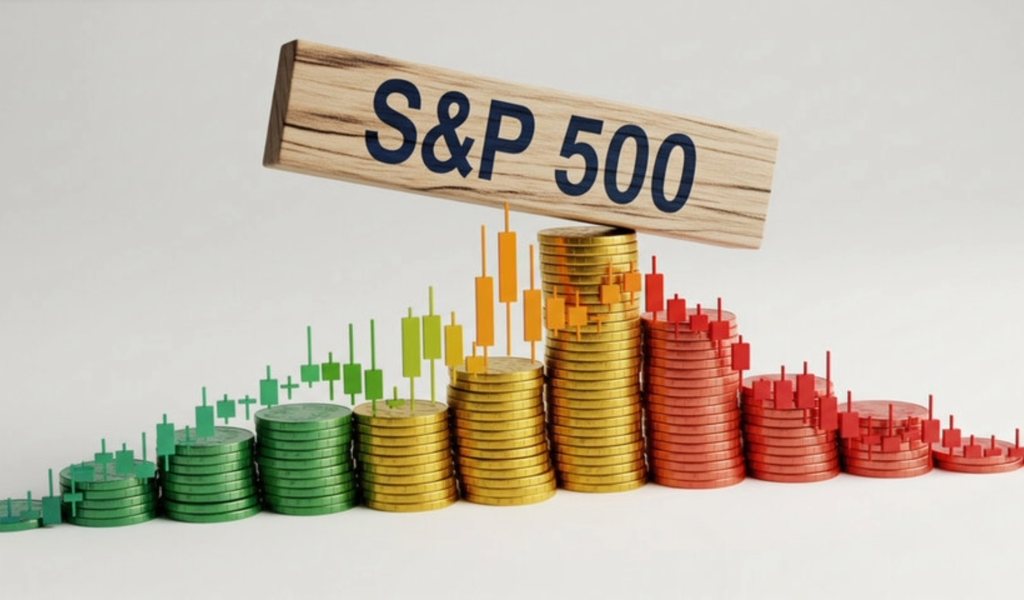
Think the S&P 500 is fully diversified? Discover the hidden concentration risk and how to build a smarter, more resilient investment strategy.
How to Earn Better Returns on Stocks (Even When You’re “Right”)

Many investors believe that success in the stock market comes down to one thing: being right. Right about the economy. Right about interest rates. Right about which companies will grow. But here’s the uncomfortable truth: You can be right about almost everything… and still earn disappointing returns.
2026 Market Drop: Why This Pullback Isn’t as Big as You Think

The 2026 market drop has investors on edge. Headlines are filled with concerns around geopolitical tensions involving Iran, rising gas and oil prices, and renewed political uncertainty tied to Donald Trump and the upcoming election cycle.